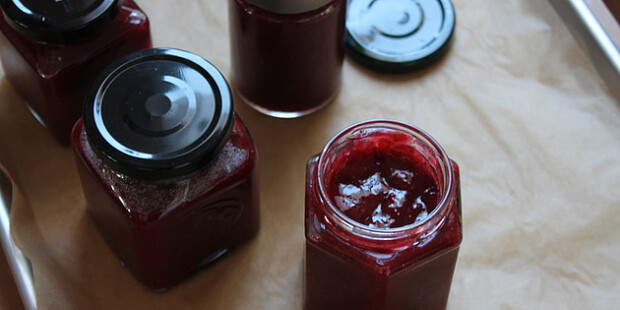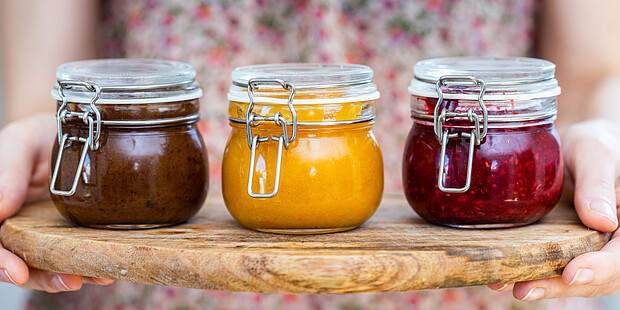
CAA Flickr Photo of the Week: Apricot Jam by LeLo

Yum Apricot Jam
This week’s photo of the week is by LeLo of LeLo in NoPo, where she writes all about preserving the harvest. Her images led me to more valuable information, like her post on infusing vinegars and her coverage of Oregon berry season. Fun!

Thanks so much for sharing in our Flickr pool, LeLo!

Don’t forget, if you’d like to participate, please join our community’s Flickr pool and submit your photos!

  • Twitter
  • FriendFeed
  • Facebook
  • Blogger Post
  • Share/Bookmark
Print

The Evolution of My Canvolution

I have not begun canning yet this year–it feels early yet to me. In my experience, you typically purchase a bushel of tomatoes on the second hottest day of the year and then can them up on the hottest day of the year.  The same goes for peaches–anything that needs a really long time processing in the water bath.

Don’t get me wrong, I’m not a novice when it comes to canning and preserving.  I grew up watching my mom making Persian pickles (torshis –from the Persian torsh, which means “sour”) and elegant concoctions such as candied watermelon rind and jams made from a pink fragrant dried rose petal sent from Iran.  The color of the resulting jam was beautiful. However, my childish palate shied away from such a floral and sweet flavor, the same one that would keep me away from my mom’s baklava for years.  Now that I am older and wiser, I take that baklava whenever it is offered to me.  While my mom’s concoctions resemble the old school heavy syrup method of preserving, where fruit pieces are left whole and are served more like a confection with tea, I take a lighter approach.  For years, I used basic recipes that you see in all extension booklets, with lots of sugar and water baths.  Nothing too crazy in the jam and preserve world.  If I was daring, I would add a tad bit lemon rind to each jar.  I was afraid of killing someone with my attempts at canning.  Twenty-two years later, no one has complained or toppled over.

A few years ago, I picked up some Christine Ferber jams in Paris.  I loved her clean fruit flavors and additions of spices to some of her jam concoctions.  When her book, Mes Confitures, was translated into English, I picked it up and have used it religiously as my guide to preserving most soft fruits.  Her method can be a bit time consuming–there is a lot of maceration and settling before things get canned.  It’s not a method I would suggest if you were planning to leave on vacation the following day.  However, the steps are easy and I think make for a well-textured and beautiful preserve that will bring you back to summer sometime in January.  While Ferber doesn’t give recommendations for water bath canning, I add this step to the process to satisfy my scientist/fastidious side.  I have not seen degradation in the final product.  Most fruit preserve recipes call for a 5 or 10 minute bath, so that is what I use.  I also prefer weighing the ingredients using a simple kitchen scale instead of using measuring cups.

Editor’s note: Christine Ferber has been called “The Fairy Godmother of Preserving” and her book, Mes Confitures is amazing.  But, she uses the “inversion” method of sealing her jars, which isn’t approved by the USDA or by us.  We recommend water-bath or pressure canning of all canned goods.

CAA Contributor Nazila Merati has lived in the Seattle area all of her life. She enjoys canning and preserving food all year around. While she favors the soft fruits, she is not adverse to making pickles when overloaded by cucumbers. She is inspired by the Farm Journal Freezing and Canning Cookbook, her friends Beth and Carol, Christine Ferber and the empty jars that come back from thankful neighbors.  She is currently endevoring to understand Persian Pickling and preserving techniques.  She blogs sporadically about travel and learning to cook Persian food at banamak.org.

  • Twitter
  • FriendFeed
  • Facebook
  • Blogger Post
  • Share/Bookmark
Print

Serious Pie Restaurant Joins the Canvolution

A year ago Tony Catini, sous chef at Serious Pie, had such a bounty of gorgeous fresh produce from the Prosser farm of restaurateur and chef Tom Douglas and his wife, Jackie that he couldn’t possibly use all of it!

Since waste is not an option in our kitchens, Tony had the fabulous brainstorm of preserving it all for winter and that’s why we were able to enjoy fabulously pickled artichokes with chile peppers, rhubarb with ginger and rosemary, beets with lavender, and green garlic with tarragon and peppercorns in the middle of our winter!  Thanks Tony and Kenan (Serious Pie line cook that also got the bug!) for thinking ahead so we could enjoy a little taste of summer earlier this year!  The next time you are in Serious Pie be sure to check out the gorgeous colorful fruits of their labor above the wine rack and pizza serving counter!   

Tony’s basic recipe:
1 part white wine or balsamic vinegar (depending on the vegetable)
1 part water
½ C of sugar–give or take some depending again on what he is preserving

Editor’s note: we recommend that you use this recipe for refrigerator pickles.

CAA Contributor Robyn Wolfe is the Marketing Director of the Tom Douglas family of restaurants.

  • Twitter
  • FriendFeed
  • Facebook
  • Blogger Post
  • Share/Bookmark
Print

What Should I Make With Cherries or Apricots?

Canning CherriesCanning Apricots
My fellow canners, I recently came into a bounty of several pounds of cherries and apricots. For one of my first ideas, I’m hoping to try my hand at homemade maraschino cherries. I’m also tempted by the Apricot Red Current Jam in my Ball Complete Book of Home Preserving.

Even then, I’ll have several pounds of each fruit left. Suggestions? Ideas?

CAA Contributor Rachel Strawn Thibodeaux loves all things culinary. She’s new to canning, but has an extensive history of searching for the next delicious meal. She writes at Rachel: Photo Diary and regularly posts on Flickr.

  • Twitter
  • FriendFeed
  • Facebook
  • Blogger Post
  • Share/Bookmark
Print

Each One Teach One

IMG_2520

I’ve been canning a little while now, perhaps you have too. Over the past few years, putting up food has made its way into the fabric of my life and my year. There’s citrus in the winter, strawberries in June, leading to a wealth of summer fruit ripe for the picking and preserving. Perhaps you do this as well. But have you ever considered teaching canning?

I’m not talking about teaching classes to the public—that’s serious stuff and often you need to be certified. I’m talking about teaching people in your life who might be interested in learning how to can.

That’s what I did last summer. Whenever someone I knew mentioned they wanted to learn, I invited them over for my next canning session. Some of these were only acquaintances—people I had met briefly through friends. They all accepted the invitation happily, and over bowls of fruit and vats of boiling water we became friends.

IMG_2518

I was able to pass along the little tricks I’ve learned along the way. I showed how I use kitchen tongs with rubber bands wrapped around the section that grips, so the cans won’t slip accidentally. I showed them how I don’t use pectin any longer for my jams, and how I’ve managed to reduce the sugar in my recipes. My friends will find what works for them, but it’s nice to have a few pointers to start them out right.

Mostly, I think, it’s nice for them to see the process. Canning can be intimidating—a form of cooking that could potentially make people sick. I’m sure many are scared of giving it a try. But by following some basic precautions it’s not that scary. I like to think that seeing how it works was helpful for my friends in building their confidence.

Soon I was getting back reports of what they were making in their own kitchens. Sandra made jam. Andrea made pickles. I was delighted to hear of their further endeavors. It made me feel like a canning fairy godmother.

IMG_2527

In the end, though, it was what I would have been doing anyway—putting up the harvest as best as I can. This year, if you are in your kitchen slicing and sterilizing, consider inviting someone who is interested to watch and learn. It feels good to pass along what knowledge I’ve accumulated—and an extra set of hands never goes to waste.

What if, this year, we all teach someone how to can? Maybe next year they’ll teach someone else. Imagine the impact.

Pass the knowledge, spread the joy, share the jam. This year, why not teach someone how to can?

IMG_2591

CAA Contributor Tara Austen Weaver is a writer, novice gardener, and avid canner. She is author of the recently released book, The Butcher & The Vegetarian: One Woman’s Romp Through a World of Men, Meat, and Moral Crisis, and writes about food and other adventures on the blog Tea & Cookies

  • Twitter
  • FriendFeed
  • Facebook
  • Blogger Post
  • Share/Bookmark
Print

Grey Gardens of Canning: Or, How I Covered My House With Canned Items

Photo by grrlscout224/Flickr

I came to canning late in life, spurred on by friends who seemed to be making pickles, jams and other yummy things every time I stopped into their kitchens. With my vegetable garden and a summer hobby of berry picking each weekend, I certainly had plenty of beautiful things to can. But, like most people, I was a little shy of tackling something that involved a big deep pan and tools that have an uncomfortable resemblance to forceps. Add to that the rather uninspiring and fear-inducing “warnings” on all of the FDA websites about the horrors if canning goes wrong. You can see why I thought I’d leave it to others to do.

Yet once I started thinking about it, I seemed to see full, colorful glowing jars everywhere: in the windows of cafes, on bakery shelves, in the pantries of friends, and decided it was time to learn. After a few group classes and demos I felt ready, and with 30 lbs of strawberries staring at me, I dove in! A few weeks ago, I spent both days making jam: one with pectin and one without, one batch with balsamic vinegar and black pepper, one with lemon zest only. Then I moved on to making strawberry vinegar and finally pickled strawberries. The jars piled up and the obsession was planted–the next weekend I tackled raspberry jam, raspberry syrup and raspberry-chipotle barbecue sauce. The pantry had to be rearranged to accommodate and anyone who visits my house is not allowed to leave without a jar in hand; but yet I keep plotting my next canning session.

This weekend: blueberry picking and all the deep blue jars I can fill. Then apricots before my canning world expands into pickles and relishes and then on to tomatoes and sauces.

If at times my kitchen resembles what my eye-rolling daughter calls “the Grey Gardens of Canning” well, so be it: the ritual of putting seasonal food by is one that comforts me and will feed my family and friends all year.

Raspberry Chipotle Barbecue Sauce, from The Berry Bible

CAA Contributor Kim Ricketts is an avid reader, involved mom, experimental and passionate home cook and life-long student of new things. She founded Kim Ricketts/Book Events in 2006 and has spent the last seven years creating events that connect writers and books to readers in new and innovative ways.

  • Twitter
  • FriendFeed
  • Facebook
  • Blogger Post
  • Share/Bookmark
Print

CAA Photo of the Week from Our Flickr Pool

women at work
This week’s photo of the week is a flashback to last year’s Canning Across America weekend, in honor of the upcoming activities and gatherings. Our photograph today is from Kimberley McKittrick’s photostream. She writes at Music and Cats, where you can find more beautiful images and recipe ideas. Thanks for contributing, Kimberley!

Don’t forget, if you’d like to participate, please join our community’s Flickr pool and submit your photos! We’d love to see your images from all the gatherings.

  • Twitter
  • FriendFeed
  • Facebook
  • Blogger Post
  • Share/Bookmark
Print

Breakfast of Jam-pions

Breakfast of champions: Strawberry jam, toast & coffee. Photo: Kim O'Donnel.

A half-flat of lipstick-red strawberries was calling my name earlier this week. Their honeyed perfume was darn near intoxicating on the car ride home. I quickly hulled, rinsed, pat-dried the ruby jewels and froze them overnight, as they were ripening by the minute.

The next morning, my canning partner in crime and I got to work. We had a total of nine cups of berries.

On the left burner, a kettle of water was at a rolling boil. On the right, a large saucepan was the home for berries, 3 cups of sugar (we did a 3 to 1 ratio) and 1/4 cup of bottled lemon juice.

Jeanne reminded me that as fruit ripens, the pectin level diminishes, so we knew this batch of berries might take a bit longer to gel. Total cook time: 40 minutes. The house was filled with strawberry perfume; we were swooning and oohing and aahing.

Nine cups of berries yielded 7 half-pints, plus a little extra for cook’s treat (which you see pictured above). Total processing time (after water comes to a boil with sterilized, packed jars in the kettle): 10-12 minutes.

Ping, ping, ping, ping, ping, ping. Music to our ears, just moments after jars are lifted out of the water bath.

Cost of half flat: $9.99. This morning’s breakfast: Priceless.

Now go put something up, ya hear?

Stay tuned later this week for a Canning Cheat Sheet, with safety basics that you can post on the fridge for reference.

  • Twitter
  • FriendFeed
  • Facebook
  • Blogger Post
  • Share/Bookmark
Print

Savoring Summer With Strawberries

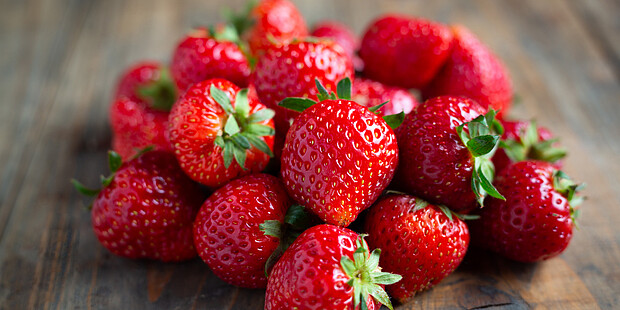
Photo by Lelonopo/from Flickr

A fresh strawberry is one of life’s great delights. Icons of summer, these luscious red jewels of nature inspire our senses with their perfumed and sweet flavor.

Canning lets us capture the bounty of this delicate and perishable fruit so we can enjoy it all year long. Strawberry jam, for example, is a staple of many a home pantry. It’s easy to make and a recipe that allows for the expression of unique tastes and creative flights of fancy. Whether it be a basic jam that lets this beautiful fruit stand on its own, a recipe that couples it with its classic partner of rhubarb, or a more exotic one that combines it with black pepper and fresh mint as Christine Ferber does in her book Mes Confitures: The Jams and Jellies of Christine Ferber, the sky’s the virtual limit when it comes to creating a lovely preserve that can allow us to connect back to summertime any time during the year.

In addition to their deliciousness, strawberries also offer us their nutritiousness. With vitamin C that rivals that of the oranges, strawberries can also be counted on as concentrated sources of fiber, manganese, and antioxidant phytonutrients such as flavonoids and ellagic acid.

If you don’t have a favorite strawberry jam recipe, check out the two we feature on our website:

Strawberry Jam, by Greg Atkinson

Strawberry Jam, by Karen Solomon

CAA contributor Stephanie Gailing, MS, CN is an astrologer, wellness consultant, and natural health writer. She is the author of Planetary Apothecary: An Astrological Approach to Health and Wellness (Crossing Press, 2009). Read her recent post, A Stellar Approach to Putting Up Food.

  • Twitter
  • FriendFeed
  • Facebook
  • Blogger Post
  • Share/Bookmark
Print

Canning Quote of the Day

Bread & butter pickles. Photo: Flickr/grrlscout224

Thursday, July 22
“I’ll be showing some ladies how to use a pressure canner when we put up pints of Roasted Poblano Salsa and quarts of Spicy Bloody Mary Mix this Saturday, July 24. We’ve got 50 pounds of tomato seconds, a basket full of peppers (hot, mild and incendiary), a peck of onions and lots of garlic and spices. We’ll enjoy a potluck lunch. At the end of the day, we all hope to go home with plenty of goodies.”
–Cathy B., Washington, D.C.

Tuesday, July 20
“When I was growing up my mom and the neighbor ladies would all get together and can whatever everyone had and then they would share the end results of their combined labors. I also took canning in 4-H and remember how proud I was of my first canning adventure – green beans!

The rest of the neighbor ladies are gone now, but my mom still cans. It’s been a long time since it was a family event and I am planning to get my mom, sister, nephew, and I together in August to have a family canning day. We’ll get to spend time with family, bond over the wholesome activity, and share in the beautiful jars of tomatoes, vegetable soup, preserves, and whatever else takes our fancy. I’m looking forward to this and will enjoy the foods all winter and the memory for years to come.”
–Janiece D., DeWitt, Ill.

Monday, July 19
“I would love to host a canning party on July 24 to help celebrate Canning Across America. I’ll call it “Getting Your Can On” –  it’s our going to the county fair canning party. Canning has been my passion since my husband’s grandmother introduced me to the lost art. Guess she wanted to make sure this city mouse would keep her country mouse grandson healthy. It became an obsession. I would take vacation from my job around what I was canning. Then March 17, 2008, I got canned from my job. I turned to canning as my crutch to battle my anger. Thus Just Got Canned was born.”
Donna S., in Spotswood, N.J.

Join Donna, Janiece & the rest of the Canvolutionaries this weekend (July 24-25) for the Can-a-Rama 2010. There’s still time to set up a home canning party & enter to win canning supplies. Let’s Jam on it!

Related Posts with Thumbnails
  • Twitter
  • FriendFeed
  • Facebook
  • Blogger Post
  • Share/Bookmark
Print